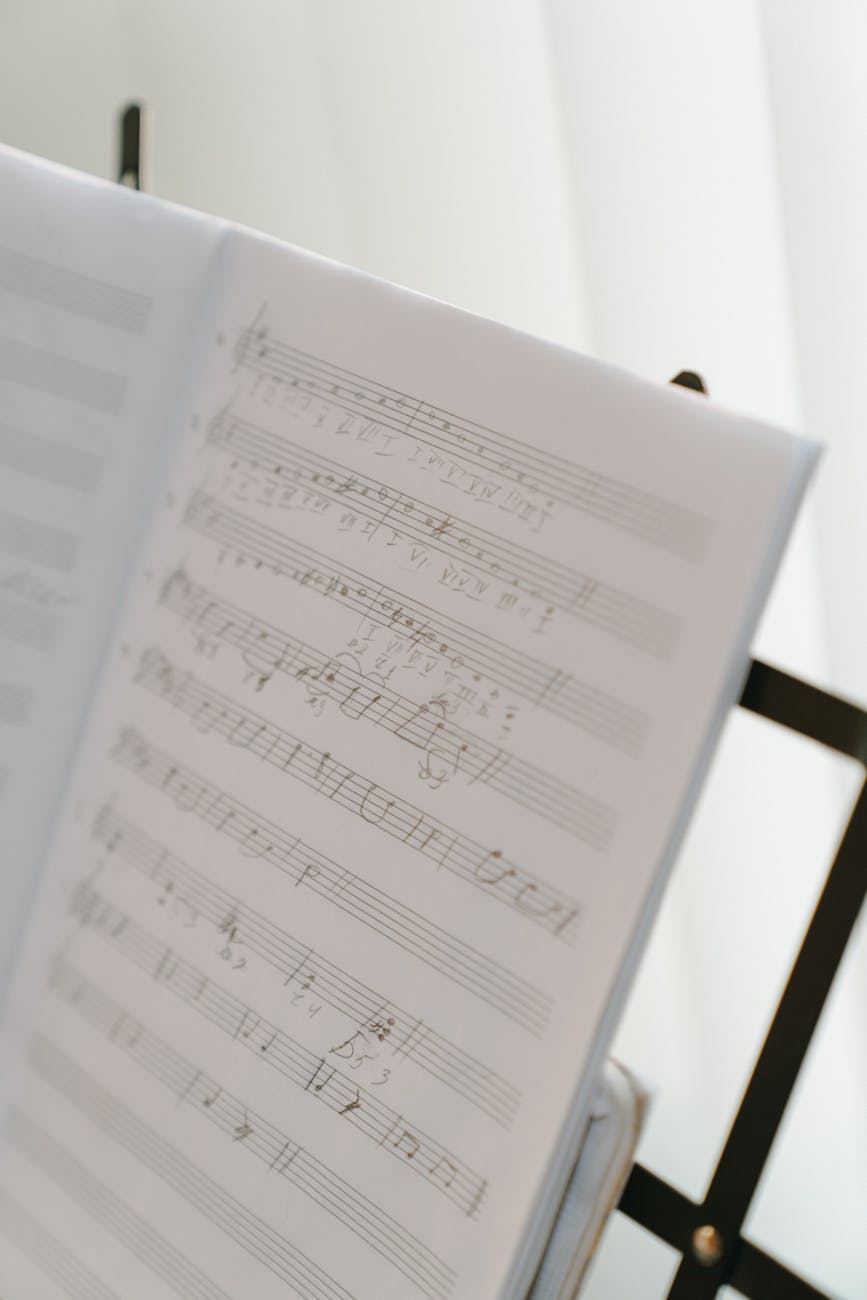
It’s crazy to me that it’s only been a year since I was just finishing my application to music school, and worrying dreadfully about passing my entrance exams (don’t worry – I did on the second try). A whole lot has happened since then; a lot of music written, some of it performed, and most of all – an awful lot learned.
I remember being a couple minutes late to my first class of the fall semester: introduction to musical research. I was so apologetic to my professor, considering it equal to being late for work, and I remember wondering why he didn’t seem terribly phased by it. Later, of course, I learned that a lot of students, it seems, don’t take their education quite as seriously as I seem to (now at this stage of my life); many of them simply didn’t show up to many of the classes.
I remember being impressed by the quality of the music being written by my peers when we shared works in composition practicum; the first few shares were, to my mind, beyond my skill level. I also remember worrying immensely about whether my personal style of music would align with what more ‘seasoned’ veterans of the contemporary classical world were writing; my music tends to be very harmonic, following tried and true forms and structures while borrowing elements from my own personal passion for rock and metal.
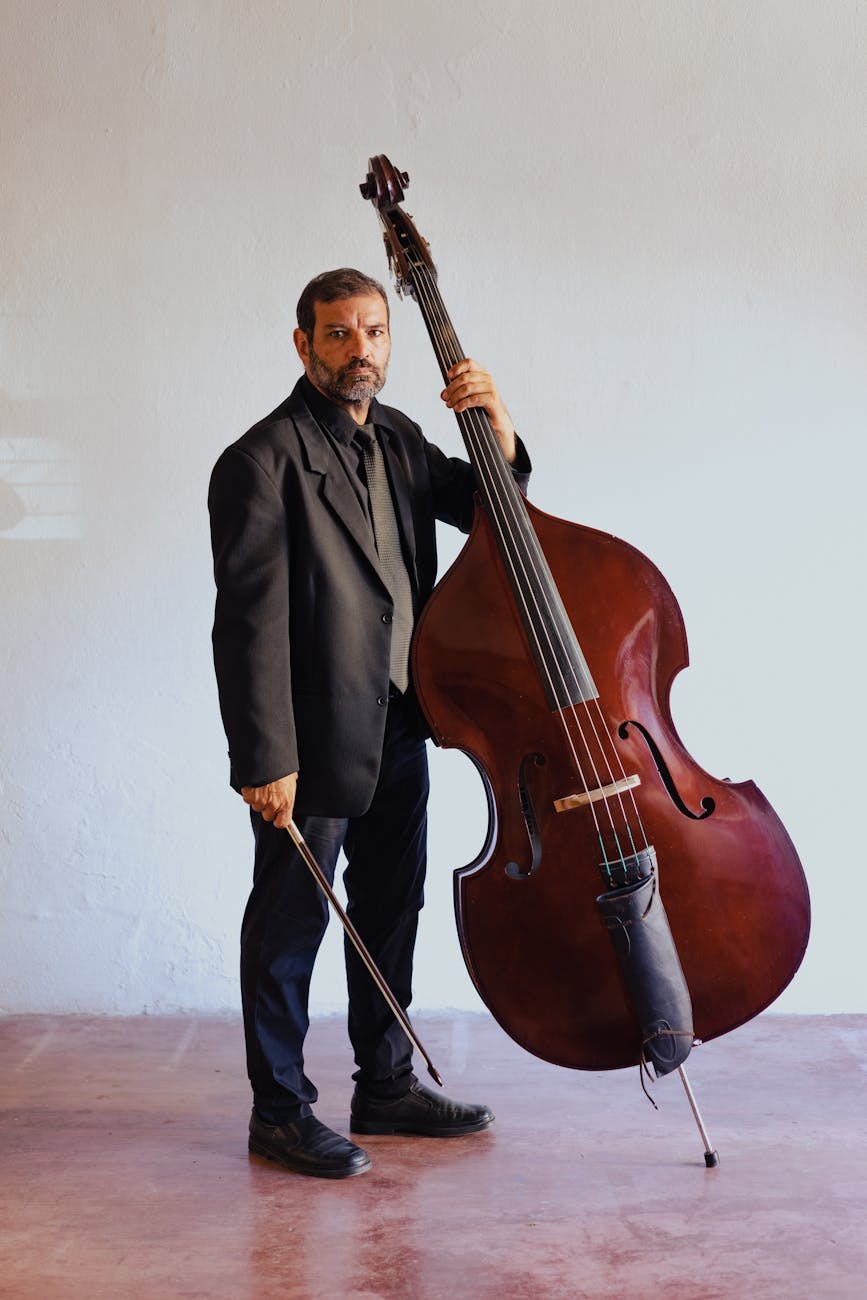
I remember being embarrassed by the fact that I didn’t know the standard tuning for a double bass (it turns out it’s the same as an electric bass, and getting that low C requires an additional piece of equipment attached to the instrument). I remember worrying that I would be significantly behind my peers in terms of understanding how various orchestral instruments work, and indeed – to begin with – I think I was.
But my professors have been incredibly supportive, both in instruction and in motivation, and I would like to think that I’ve learned compositional techniques at an accelerated pace, bringing me (hopefully) to a point where I’m at least on par with other graduate-level students.
One of the things my composition professor was scandalized to learn was that, during my undergraduate degree in Sheffield, I never had a piece I wrote actually played by anyone. It’s weird, because I hadn’t really considered it as important at the time – composition was almost entirely theoretical to me back then, and I rarely considered how well a piece might be performed – but in hindsight, it’s perhaps a great miss on my own behalf from my younger days. (I’m sure there were opportunities to have my music played that I never took advantage of.)
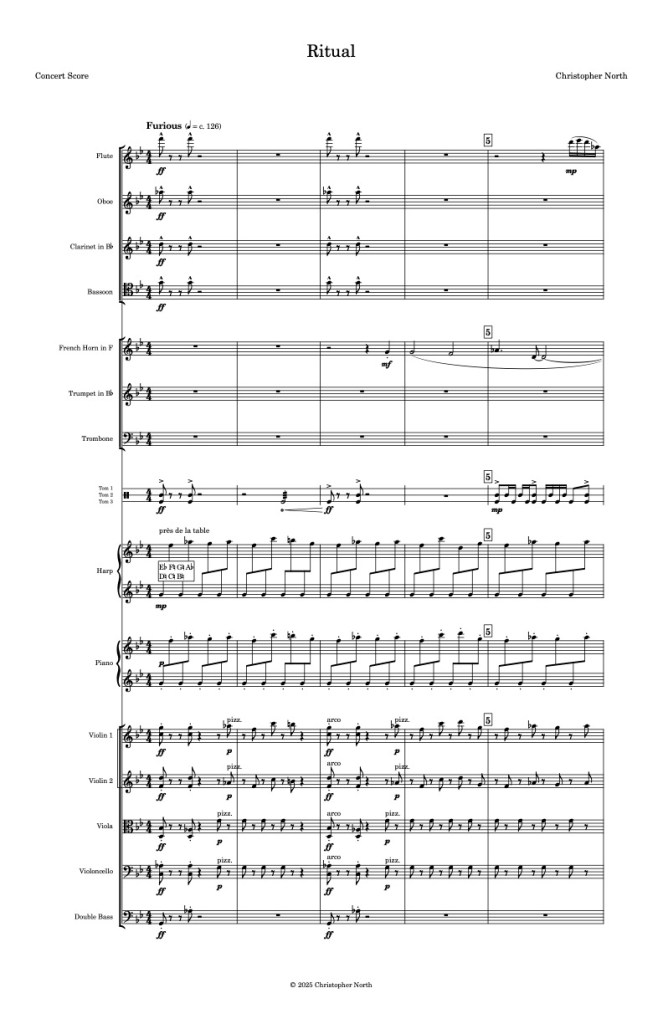
So I’m incredibly grateful that I’ve managed to have five performances over the past two semesters: an oboe sonata and two songs performed at Mason Gross’ New Music Workshop, a solo cello work performed at a music assembly, an orchestra reading of the symphony I’m working on, and finally (most recently) a performance of my first chamber orchestra work, Ritual, by Rutgers’ Helix ensemble.
Hearing your work performed by someone other than a computer is really a magnificent experience, and I couldn’t be more proud of the work that Nathaniel, Mina, Micaela, Karina, and so many others put into performing my works. I learned a great deal through working with live musicians, as well – for example, don’t give your performers sheet music that hasn’t been bound or taped together (I reference a minor disaster with the oboe sonata where, partway through the performance, the oboist’s sheet music fell off the stand)! I also learned that music shouldn’t – indeed, can’t – be purely theoretical, unless it’s intended to be performed by a computer; it needs to consider the idiomatic performability of each instrument, and whether or not a particular idea, motif or figure actually needs to be exactly the notes I originally considered, or whether a simpler figuration can achieve the same textural or sonic idea with less effort from the players.
Over the past eight months, I’ve managed to write around 90 minutes of music, which ironically feels slow to me, despite my professor indicating that I tend to write somewhat faster than most. What I’m most pleased with, however, is less the duration of the written music and more the quality of said music. I would like to believe that each piece I’ve written – whether for solo instruments, chamber groups, or full orchestra – has been thoroughly considered, thought-out, and edited to achieve maximum playability. This is a process I had never really put much time or effort into in the past; historically, once I was done getting the notes down, I simply called it a day and moved on to the next project. Now, I realize that writing a musical work is no different than writing a book; the first draft is rarely the final one, and usually will require significant changes before it will ‘work’ with the performers.
I now have summer break looming ahead of me, and along with registering for next semester’s classes, I also need to consider what to work on while I’m ‘off’. For starters, I would really like to complete the second movement of my symphony, as well as finish off a song cycle I started back in February (six of ten songs are complete). Depending on time, I would like to look into the possibility of writing a work for chamber group and vocalist(s); according to some of the singers I’ve worked with this past semester, there is not an awful lot of repertoire for this combination, and it’s also a requirement of their degree.
Ultimately, these past two semesters have been a whirlwind of activity, and whilst at times I felt like I was being dragged straight into the deep end in a journey I wasn’t really prepared for, I also feel like I’ve managed to tread that water, hold my own, and get to a point where I feel far, far more confident in my skills as a composer, whilst still understanding there is a lot more to learn moving forward.
Here’s to the next academic year, and learning even more about becoming a great composer!
 The Revenant Composer
Leave a comment