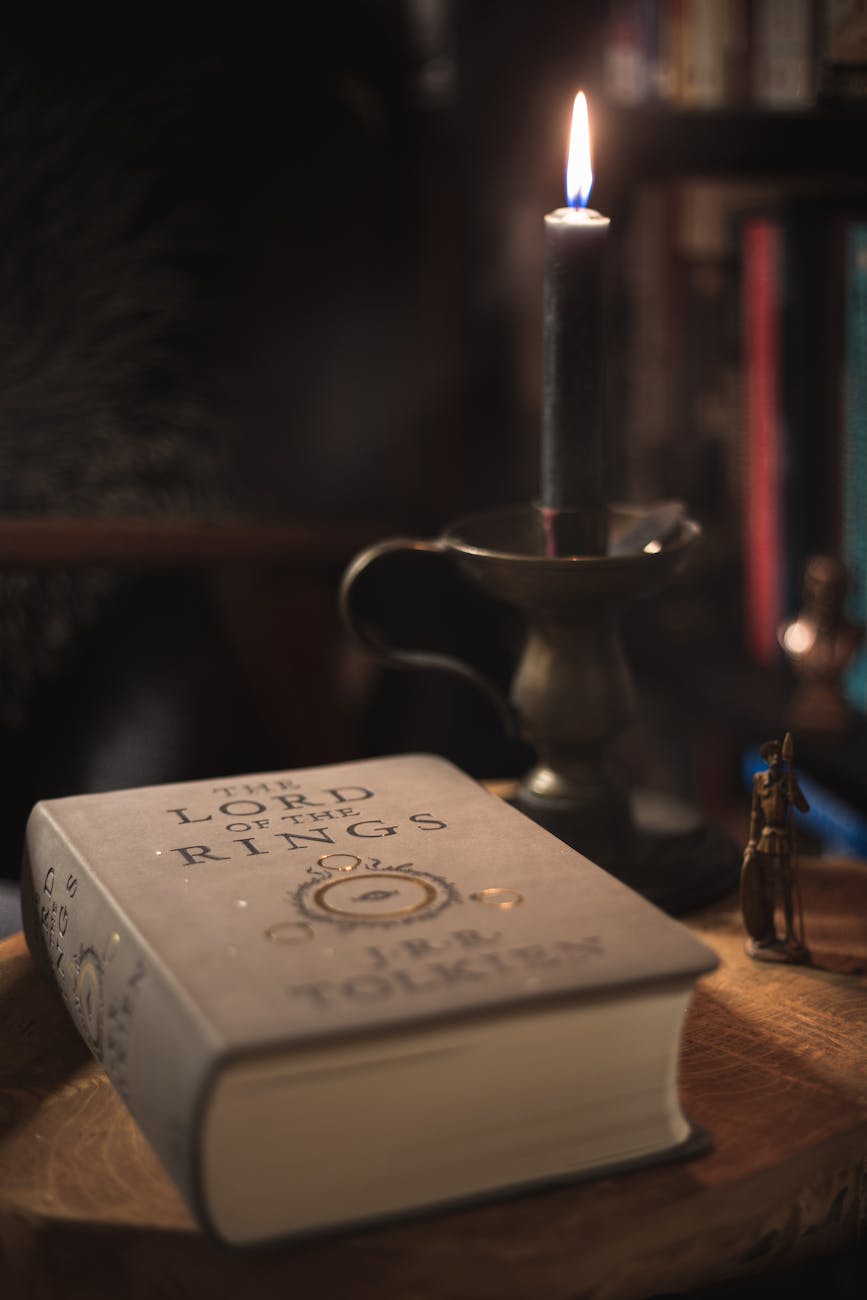
It’s funny to think that Howard Shore was primarily known for horror soundtracks prior to his engagement as the composer for Peter Jackson’s The Lord of the Rings trilogy. Movies like Scanners, The Fly and The Silence of the Lambs, while famous in their own right, never struck me as having terribly notable scores (The Silence of the Lambs does have an intriguing opening piano theme, if I recall correctly).
For this reason, I never particularly paid much attention to Howard Shore prior to 2001, when The Fellowship of the Ring came out and bedazzled viewers (including myself) with cinematic majesty and aural grandeur like none we had seen or heard before. Even John Williams, famed for his triumphant and memorable themes for movies like Star Wars, Indiana Jones and E.T. suddenly seemed to pale in comparison to the veritable opera Howard Shore had created for these films.
The Lord of the Rings quickly became my favorite films of all time, and I’m sure I’ve watched them in their entirety at least fifty times, if not more. And the more I watched them, the more intrigued I became by Shore’s genius in the musical score that accompanies them.
Starting with the main theme of the Ring, we have a simple enough melancholic melody that, in itself, is essentially in A minor. But Shore didn’t harmonize it in A minor at all; in fact, the opening chord is an F minor chord, into which the lead note of B doesn’t really fit at all (sharpened fourth of the scale). The B then resolves to a C, which does fit with F minor of course, but as it descends down to the A natural, we continue to get this gorgeous clash against the A flat in the harmony. Only when the melody moves to the B, descending to E, do we get a sense of resolution as the melody shifts to an E minor chord.

This use of alternative harmonization to a simple melody is found throughout the Lord of the Rings soundtrack. Consider the theme of the “fellowship”, that famous horn melody that blares as the fellowship set out from Rivendell: again, a melody that, in itself, is essentially in a single key. Again, Shore uses a diverse array of chromatic mediants to reharmonize this motif into something otherworldly and majestic – perfectly fitting the setting of a fantasy world where magic and mystery abound.
It’s fascinating to me to consider how Howard Shore might have come up with these ideas. Deconstructing his motifs leads me to think that he started with the melodic idea – in most cases a tiny germ of music that is only a few measures long – and looked for ways to counterintuitively harmonize it. This is something I hadn’t really come across before in my experience of both old and contemporary classical music (though I’m sure Shore didn’t come up with the idea – my own education is limited); even John Williams, when he does get chromatic, typically harmonizes a melody within the key the melody itself outlines.
When I was writing my requiem over the past couple of years, chromaticism and unrelated key centers became a strong element of the musical character. The opening of the Introit begins with a C minor chord, moving almost immediately to B minor; then to Eb minor; and onward from there. In fact, despite it being largely centered around C minor, I deliberately chose not to include a key signature for the music because it strays so widely from this tonic root for most of the movements.
Now, as I begin work on my first symphony, these ideas from Howard Shore are floating through my head as interesting ways to contextualize otherwise simple melodic ideas. I love to have notable and memorable melodies to play with, but now I don’t have to restrict myself to the key center of the melody; I’ve learned from Shore how to harmonize better.
 The Revenant Composer
Leave a comment